Hydraulic motors
Hydraulic motors
Hydraulic motors, pumps, valves, cylinders and steering units from a Dongguan manufacturer, organised by category and series.
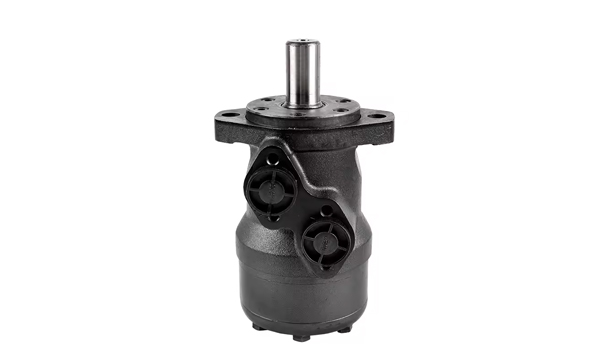
The company profile states that Dongguan Blince Machinery & Electronics Co., Ltd. is a professional hydraulic component manufacturer established in 2004, and that statement is the anchor for this home page, written here with its attribution attached rather than presented as an unattributed fact. The company profile also states that it specialises in hydraulic motors, hydraulic pumps, hydraulic valves, hydraulic cylinders, steering control units, hydraulic hoses, fittings, and customised hydraulic systems, and that list is the map for the rest of this site: every category page below belongs to one of those product lines, and every series page belongs to one of those categories. A reader who starts on this home page can therefore move from the company description to a category, from a category to a series, and from a series to a specification check, with each step narrowing the question instead of repeating the same broad claim, and with each series description kept separate from the descriptions of other series.
This site is organised for buyers who need to match a hydraulic component to a machine, and that organisation shapes every page: category pages explain a family, series pages describe a named series, selection guides ask for the operating values and mounting details that narrow a field, comparison pages put two duties or two arrangements side by side at the same level, and blog articles explain a topic at category level so that a reader can prepare for a specification check. Work through category, series and fit questions in order before discussing price or delivery, so that the specification check can be answered against a named series that has been shown to suit the machine.
The product lines named in the company profile are hydraulic orbital motors, radial piston motors, axial piston pumps, gear pumps, directional control valves, hydraulic cylinders, steering control units, hydraulic hoses, fittings, oil coolers, and custom hydraulic power units, and each of those lines has its own category page on this site with its own description and its own links. Those lines are not presented as a single undifferentiated range, because a motor, a pump, a valve and a cylinder answer different questions in a circuit, and a buyer who treats them as interchangeable will miss the very differences that decide whether a part fits a machine. The category grid below lists each line with a short description, and each card links to the category page where the line is described in full, with its series, its guides and its fit questions, so that a reader can start from the line that matches the machine and ignore the lines that do not.
Within the motor lines, the site distinguishes orbital motors, radial piston motors and travel motors, because those families differ in construction and in duty, and the series pages inside each family carry their own descriptions rather than sharing a single family description. Within the pump lines, the site distinguishes axial piston pumps and gear pumps for the same reason, and within the valve lines it distinguishes directional control valves, because a valve that directs fluid is not the same kind of part as a motor that turns fluid power into rotation, even when both appear in the same circuit.
The company profile states that its components are used in construction machinery, agricultural machinery, mining equipment, forestry machinery, marine equipment and industrial applications worldwide, and those six application fields are where the company profile places its components in general. That statement is written here with its attribution attached, because it describes where the company profile places its components in general, not a guarantee for any particular machine, any particular duty cycle, or any particular installation, and a buyer who works in one of those fields should still confirm fit against a named series before ordering. Application fields are useful as a first filter, because they help a reader decide whether to look further at all, but they are not a specification, and they do not replace the operating values, the mounting details and the working conditions that a specification check requires.
A machine in construction work, for example, can differ from a machine in agricultural work in duty pattern, in contamination, in temperature and in the way it is started and stopped, even when both machines use a hydraulic motor, and those differences are why the selection guides on this site ask for working conditions in the same message as operating values. The same point applies across mining, forestry, marine and industrial applications: the field tells a reader where to start looking, and the specification check tells a reader whether a named series fits the machine that will actually receive it.
Each series page carries its own description, its own applications and its own fit questions, so that a reader who compares series can do so on anchored facts rather than on family labels alone. Those series include valve, motor and travel motor series that belong to different families, and the family pages group them by construction and by duty. For figures, read the series page for the named series. A reader who already knows a series name can go straight to that series page, and a reader who does not yet know a series name can use the selection guides, which ask for the operating values and mounting details that narrow the field before a series is chosen.
For the figures of a series, read that series page. Category pages help a reader find a family, and guide pages help a reader prepare a specification check. To read the figures for a series, go to that series page: the category page is for finding a family, and the guide page is for preparing a specification check.
Selection on this site follows the checklist named in the company profile: flow rate, pressure, displacement, torque, mounting dimensions and working conditions, and those six items are used in the same order across category pages, series pages, guides and comparisons, so that a reader who learns the checklist once can use it everywhere. Flow rate and pressure describe what the circuit can deliver and what it will run at, displacement and torque describe what the motor or pump must do with that fluid, mounting dimensions describe whether the part will physically fit, and working conditions describe the environment the part will face in service. Writing those six items down before an inquiry is the single most useful preparation a buyer can do, because it turns a general category question into a specific specification question that can be answered against a named series.
The company profile states that its engineering team can help select suitable models based on those six items, and that statement is kept here with its attribution attached, because it describes a service offered in the company profile, not a guarantee that any particular series will suit any particular machine. A buyer who sends those six items together, along with the machine and the application, gives the supplier a complete starting point, and also makes it easier to spot a mismatch before an order is placed, which is the whole point of working through the checklist before discussing commercial questions.
The company profile states that it can help select suitable replacement hydraulic motors, pumps, valves and other components according to model numbers, technical parameters, or samples, and that statement is kept here with its conditions attached, so that a replacement is treated as a matching exercise rather than as a guess based on appearance alone. A replacement check therefore starts from the existing model number, continues with the technical parameters of the existing part, and, where the parameters are incomplete, uses a sample or a drawing to close the gap, rather than assuming that a similar-looking series will behave in the same way. The company profile also states that it supports customisation based on drawings, samples, installation dimensions, pressure, flow rate, displacement, torque and application requirements, and that statement is likewise kept with its conditions attached, because custom work is defined by the drawings and requirements supplied, not by a general promise.
Readers who are replacing a part should also confirm whether the circuit and the control arrangement will stay unchanged, because a replacement component sits inside a system and a change in one part can change the behaviour of the circuit around it. That system view is part of the specification check, not an extra step after ordering, and it is the reason the inquiry guidance on this site asks for application details as well as part details, and for mounting details as well as operating values.
The guides on this site cover motor selection, pump selection, cylinder selection, gear pump selection, replacement selection and hose fitting selection, and each guide follows the same checklist, so that a reader who has used one guide can use the others without learning a new method each time. The comparison pages cover orbital motors against radial piston motors, travel drive duty against slew drive duty, and single-acting cylinder arrangements against double-acting arrangements, and each comparison describes both sides at the same level, using category descriptions rather than series figures, so that the comparison does not favour one side by describing it in more detail than the other. The blog articles cover hose fitting types, cylinder stroke length, gear pump rotation, motors for excavator work, oil cooler selection, valve troubleshooting as a confirmation exercise, power unit components, and low-speed high-torque motor applications, and each article is written at category level, so that it prepares a reader for a specification check rather than presenting itself as a specification.
Guides, comparisons and articles help a reader prepare the questions that a series description can answer, and recognise when a question cannot be answered from a category page alone. For series figures, read the series page. A reader who has worked through a guide or an article and is ready to name a series can go straight to that series page, and a reader who is not yet ready can return to the category pages, where every family is listed with its own description and its own links.
When the category, the series and the fit questions have all been checked, the inquiry itself can be short: the series name, the application, the operating values, the mounting details and the working conditions, sent together in one message, give the supplier everything needed for a specification check. That short, complete message is more useful than a long message that repeats the category description, because it anchors the conversation to a named series and to a named machine, and it puts specification questions first in the message. Before ordering, confirm minimum order quantity, lead time, and pricing for your specification.
Certificates available upon request. For certificates for this site, Certificates available upon request. A buyer who needs a certificate for a particular market or a particular application should name that market and that application in the inquiry, so that the answer can be given for the same scope as the question, and the contact and inquiry pages linked from this page are the places to send that message.
| Application field | Company profile application fields |
| Construction machinery | Named in the company profile |
| Agricultural machinery | Named in the company profile |
| Mining equipment | Named in the company profile |
| Forestry machinery | Named in the company profile |
| Marine equipment | Named in the company profile |
| Industrial applications | Named in the company profile |
Hydraulic motors
Hydraulic pumps
Hydraulic valves
Hydraulic cylinders
Hydraulic hoses and fittings
Hydraulic oil coolers
Hydraulic power units
Hydraulic steering control units
Ask for a specification check.