OMER series orbit motor
OMER series orbit motor
Orbital motors family page with series descriptions and fit questions.
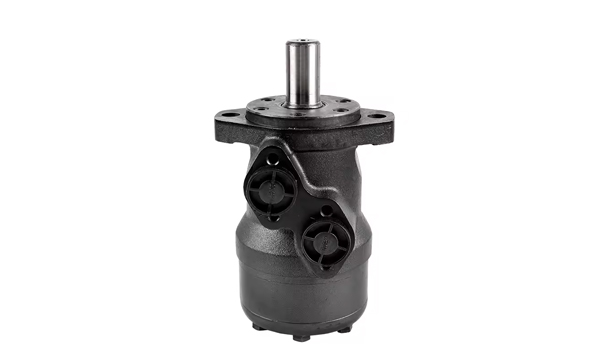
The orbital motor family on this site is described through the OMER series, and that series page carries the orbital motor description for this family. This page describes the family, not any single product: see which series share a construction or a duty first, then look at any one series in detail. The series in this family are OMER, and each of them has its own page with its own description, its own applications and its own fit questions, so that a reader who compares series can do so on anchored facts rather than on family labels alone. The company profile states that its components are used in construction machinery, agricultural machinery, mining equipment, forestry machinery, marine equipment and industrial applications worldwide, and this family sits inside that wider application field.
For figures, read the series page for the named series. The Orbital motors family page points to series pages and does not list series figures. Category descriptions on this page point to the series pages where the figures belong, so every figure can be checked against the series it belongs to.
A buyer who arrives at the Orbital motors page usually has a duty in mind, such as driving a wheel, swinging a structure, lifting a load, or powering a tool, and the first useful step is to match that duty to a series description rather than to a family name alone. Duty matters because two series in the same family can still differ in mounting, in speed range, in torque behaviour and in the way the circuit controls them, and none of those differences are visible in a family label. The series links on this page are therefore presented as a shortlist to work through, with each series page carrying its own description, so that the comparison happens on facts that belong to a named series.
Where a buyer already knows a series name, the fastest route is to go straight to that series page and read its description, its applications and its fit questions, and to use the inquiry page only after those items have been checked for the Orbital motors family. Where a buyer does not yet know a series name, the selection guides linked from this page are a better starting point, because they ask for the operating values and the mounting details that narrow the field before a series is chosen.
The company profile states that its engineering team can help select suitable models based on flow rate, pressure, displacement, torque, mounting dimensions and working conditions, and those six items are the selection checklist used across this site for the Orbital motors family. Flow rate and pressure describe what the circuit can deliver and what it will run at, displacement and torque describe what the motor must do with that fluid, mounting dimensions describe whether the part will physically fit, and working conditions describe the environment the part will face in service. Writing those six items down before an inquiry turns a general family question into a specific specification question that can be answered against a named series.
Working conditions deserve particular attention in the Orbital motors family, because temperature, contamination, duty pattern and start-stop behaviour all affect hydraulic components, and two series with similar headline figures can behave differently when those conditions differ. A buyer who includes working conditions in the first message therefore saves a round of questions later, and also makes it easier to say whether a series description covers the intended duty or whether a different series should be considered.
Fit confirmation for the Orbital motors family starts from the existing part or the machine drawing, continues with the model number and the technical parameters, and, where the parameters are incomplete, uses a sample or a drawing to close the gap. The company profile states that it can help select suitable replacement components according to model numbers, technical parameters, or samples, and that statement is kept here with its conditions attached, so that a replacement is treated as a matching exercise rather than as a guess based on appearance alone. Before ordering, confirm minimum order quantity, lead time, and pricing for your specification.
For certificates for the Orbital motors family, Certificates available upon request. A buyer who needs a certificate for this family in a particular market should name that market in the inquiry, so that the answer can be given for the same scope as the question.
When the family, the series and the fit questions for the Orbital motors family have all been checked, the inquiry itself can be short: the series name, the application, the operating values, the mounting details and the working conditions, sent together in one message, give the supplier everything needed for a specification check. That short, complete message is more useful than a long message that repeats the family description, because it anchors the conversation to a named series and to a named machine, and it puts specification questions first in the message. Readers who want to see how the wider range is organised can return to the home page, where every category is listed with its own description, and readers who want a structured set of questions can use the selection guides linked from this page.
| OMER series orbit motor | hydraulic orbital motor |
OMER series orbit motor
Ask for a specification check.